
World Cricket
Australia's Top-Order Reset: Big Shake-Up Ahead of WTC Series Decider in Cape Town
यह रिपोर्ट ऑस्ट्रेलियाई टेस्ट टीम के टॉप-ऑर्डर फेरबदल पर केंद्रित है, जो केप टाउन में WTC सीरीज़ के निर्णायक मुकाबले से पहले हो रहा है। मुख्य बिंदु: मैथ्यू रेनशॉ को ट्रैविस हेड के साथ ओपनिंग के लिए दावेदार माना जा रहा है; निक मैडिसन (चार पारियों में एक बार 10+ स्कोर) और बैकअप विकेटकीपर सैम हार्पर को स्क्वाड से रिलीज किया गया। सबसे बड़ा जोखिम हेड का ओपनिंग में स्थानांतरण है, क्योंकि उनका स्थापित रोल मिडिल-ऑर्डर है और उनका टेस्ट ओपनिंग रिकॉर्ड अज्ञात है। हार्पर की रिलीज से संकेत मिलता है कि मुख्य विकेटकीपर फिट है। ऑस्ट्रेलिया की असली समस्या टॉप-ऑर्डर की निरंतरता है, और संकुचित WTC कैलेंडर हालिया फॉर्म को अधिक महत्व दे रहा है। न्यूलैंड्स की सीम-अनुकूल परिस्थितियां और टॉस/मौसम का पूर्वानुमान इस चयन से अधिक महत्वपूर्ण हो सकते हैं। कुल जोखिम मध्यम है, जो एक ही फैसले में केंद्रित है।
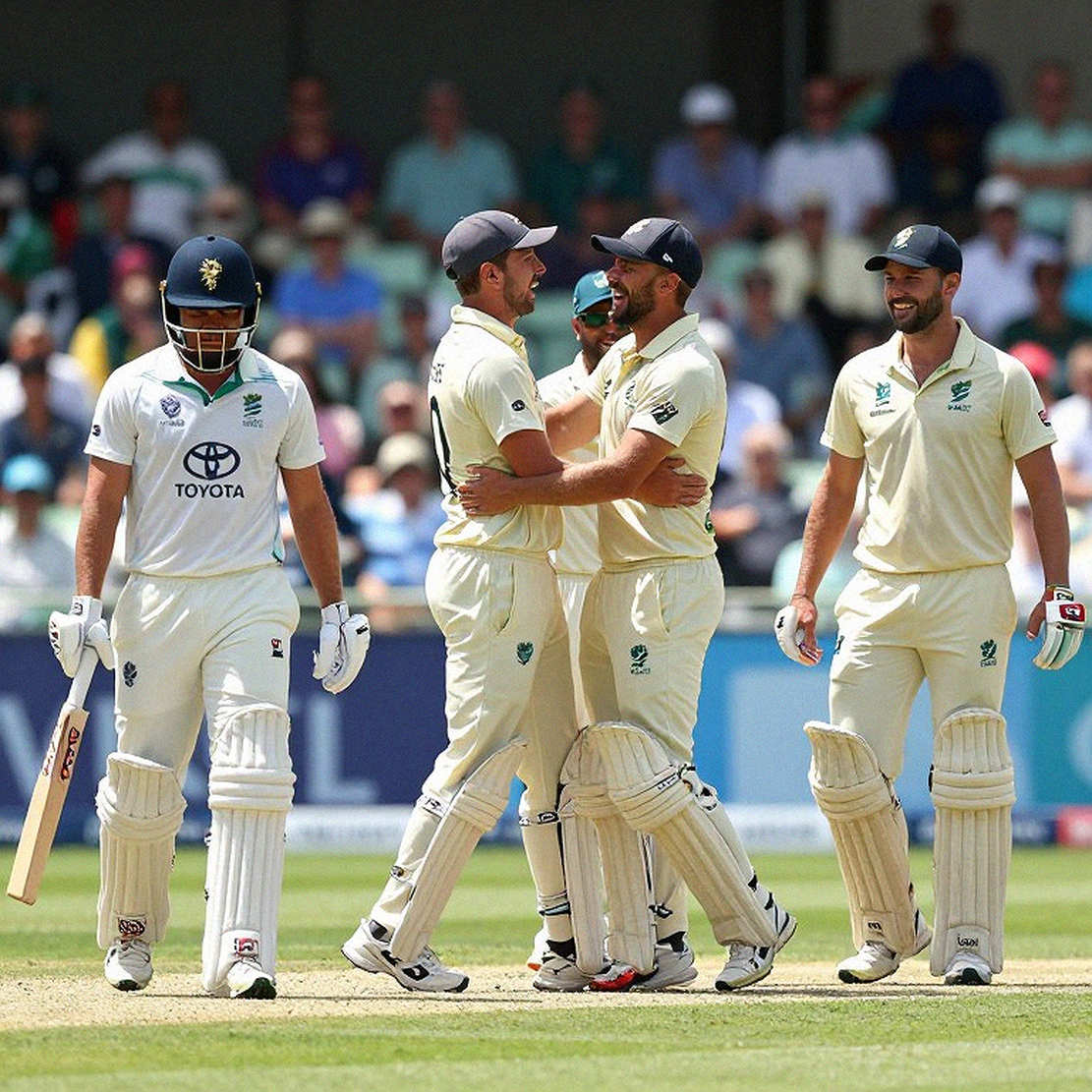
Ahead of the third and deciding Test of the ICC World Test Championship (WTC) series at Newlands in Cape Town, the Australian team is set to make at least one change to its batting order. According to an official ICC report, Matthew Renshaw is in contention to open the innings alongside Travis Head, while Nic Maddinson and backup wicketkeeper Sam Harper have been released from the Test squad. This decision comes at a time when Australia's top order is already under pressure and the series is likely tied at 1-1. This report is not just a selection news story but a signal of a deeper crisis in the structure of Australian Test batting.
Maddinson's axing is the most talked-about decision. Since his recall, he has scored above 10 only once in four innings, meaning at least three innings where he failed to reach double figures. This four-innings sample is statistically very small for Test cricket, but the selectors prioritized recent output. The decision seems procedurally correct but analytically weak, as a four-innings window for a middle-order batter falls well within normal Test variance. It signals a selection culture that prioritizes recent form over long-term averages.
Releasing Sam Harper is a positive signal. Boards rarely strip wicketkeeping cover before a Test unless the first-choice keeper is fit and available. This means Australia's first-choice wicketkeeper is ready for the match. This is information the report did not state explicitly, but the release action leads to this inference.
But the biggest and least clarified part of this whole story is Travis Head opening. Head's established Test role is middle-order, predominantly at No. 5, where his aggressive counter-attacking has been a structural weapon against the second new ball and spin. Moving him to the top order forces him to face the hardest conditions in Test batting: the moving ball in the first hour in South Africa. Simultaneously, it removes him from the position where his output has been highest. This is a risk the report has not analyzed at all.
Newlands conditions may also be behind Australia's move. The Cape Town pitch is generally seam-friendly early, with good pace and bounce, flattening into a good batting strip later. If there is grass on top, facing the new ball becomes even harder. Renshaw is a left-hander and Head is also a left-hander; a left-left pair can disrupt a seam attack's line and rhythm, especially when South Africa's pace attack includes bowlers like Kagiso Rabada, Marco Jansen, and Lungi Ngidi. But this is a low-confidence conclusion because the report says nothing about weather, toss, or pitch conditions.
In the broader context, Australia's problem is not a lack of talent but top-order continuity. The report documents the symptom of change but not the cause. Multiple changes at the top of the order within one series is a classic marker of a post-retirement rebuild. The compressed Test calendar under the WTC gives selectors fewer innings to evaluate batters, giving more weight to recent form. The Maddinson case is a direct example.
This deciding Test against South Africa is important not only for the series but also for the WTC final race. Although the report does not mention the series score or WTC points table, the word 'decider' suggests high stakes for both teams. For Australia, if this change fails, the next move will be another reshuffle, prolonging instability into the next series. If it succeeds, it will be seen as the solution to the problem.
Injury risk also needs attention. With Harper gone, wicketkeeping cover is exhausted. If the main wicketkeeper is injured before or during the match, it could become a genuine crisis. This is a low-probability but high-impact risk that most people will overlook.
Media and fan attention will focus on Maddinson's departure because it is the easier story. But the real and more consequential story is Head's repositioning to opener. The report presents this change as a fact without stating whether Head has ever opened in Test cricket, and if so, what his record is. This is the biggest gap in the entire report.
Overall, this is a low-hype but high-substance news item. The risk is concentrated in one decision: sending a middle-order batter to the top order in away seam conditions. Governance and integrity risk is near zero. But sporting risk is medium to high, because the report's only actionable item is also its biggest unquantified variable. The toss and weather forecast at Newlands will matter more than this selection, and the report predates that. For Australia, this Test will decide not only the series but also the direction of its top-order rebuild.

संबंधित खिलाड़ी
लोकप्रिय/पसंदीदा पुस्तकें
WACA's 149 and the Nine-Innings Ledger: Auditing Sam Konstas's Test Recall Case2026-10-25
The Unaudited Stage in Cricket's Data Supply Chain2026-10-25
The Empty Lines of the Scorecard: Where the Truth Falls in Transfer-Window Noise2026-10-25
Afghanistan's Seventh Straight Win: Rahmat Shah's Quiet Authority, and the One Sentence From Pybus Nobody Read2026-10-25
When the Cricket Data Pipeline Came Back Empty: How a Failure Report Became the Story2026-10-25
Sri Lanka's Historic ODI Chase: 93 Fours, 30 Sixes, and a Record the Rulebook Built2026-10-24
Australia's Top-Order Reset: Big Shake-Up Ahead of WTC Series Decider in Cape Town2026-10-27
अनुशंसित
The Slow-Burn 121 at Gqeberha: Travis Head and Australia's Empty Top Order2026-10-25
The Empty Lines of the Scorecard: Where the Truth Falls in Transfer-Window Noise2026-10-25
Four Stories, Not a Single Score: What The Scoop's Promo Says About Cricket's Real Agenda2026-10-25
Afghanistan's Seventh Straight Win: Rahmat Shah's Quiet Authority, and the One Sentence From Pybus Nobody Read2026-10-25
WACA's 149 and the Nine-Innings Ledger: Auditing Sam Konstas's Test Recall Case2026-10-25
Shikhar Mohan in India A: The New Zealand Seam Audition and the Unspoken Condition on Domestic Runs2026-10-24
The Empty Record: The Cricketer the Data Cannot Read2026-10-25
अनुशंसित
The Unaudited Stage in Cricket's Data Supply Chain2026-10-25
Two Matches, Two Chases, One 8 PM Start: In New Zealand, Dew Has Outvoted the Toss2026-10-25
Four Stories, Not a Single Score: What The Scoop's Promo Says About Cricket's Real Agenda2026-10-25
From the second over at the WACA to 371: Sam Konstas's 149 and Australia's No.3 question2026-10-25
When the Cricket Data Pipeline Came Back Empty: How a Failure Report Became the Story2026-10-25
The Empty Lines of the Scorecard: Where the Truth Falls in Transfer-Window Noise2026-10-25
अनुशंसित
When the Cricket Data Pipeline Came Back Empty: How a Failure Report Became the Story2026-10-25
Cape Town Decider: Without Nortje, South Africa's Real Test Is the Seam, Not the Squad List2026-10-25
From the second over at the WACA to 371: Sam Konstas's 149 and Australia's No.3 question2026-10-25
The Empty Lines of the Scorecard: Where the Truth Falls in Transfer-Window Noise2026-10-25
Australia's Top-Order Reset: Big Shake-Up Ahead of WTC Series Decider in Cape Town2026-10-27
The Unaudited Stage in Cricket's Data Supply Chain2026-10-25
WACA's 149 and the Nine-Innings Ledger: Auditing Sam Konstas's Test Recall Case2026-10-25
अनुशंसित
When the Cricket Data Pipeline Came Back Empty: How a Failure Report Became the Story2026-10-25
Two Matches, Two Chases, One 8 PM Start: In New Zealand, Dew Has Outvoted the Toss2026-10-25
Four Stories, Not a Single Score: What The Scoop's Promo Says About Cricket's Real Agenda2026-10-25
The ₹120 Crore Purse and the Impact Player: The Real Rule That Prices IPL Talent2026-10-25
The Empty Record: The Cricketer the Data Cannot Read2026-10-25
From the second over at the WACA to 371: Sam Konstas's 149 and Australia's No.3 question2026-10-25
The Slow-Burn 121 at Gqeberha: Travis Head and Australia's Empty Top Order2026-10-25