
Johor Cup Final: Malaysia's Title Was Built on Two Penalty Corners, the Shootout Only Sealed It
मुख्य उत्तर: मलेशिया ने सुल्तान ऑफ जोहोर कप 2026 का फाइनल पाकिस्तान के खिलाफ 2-2 की बराबरी के बाद पेनल्टी शूटआउट में 4-3 से जीता। निर्धारित समय के चारों गोल में से तीन पेनल्टी कॉर्नर से आए; मेज़बान टीम ने खुले खेल से एक भी गोल नहीं किया। मुख्य तथ्य: - फाइनल जोहोर बहरू के तमन दया हॉकी स्टेडियम में खेला गया, जहां निर्धारित समय 2-2 पर बराबर रहा। - पाकिस्तान के वलीद राणा (19वां मिनट, पीसी) और मुहम्मद उस्मान (21वां मिनट, फील्ड गोल) ने टीम को 2-0 की बढ़त दिलाई। - मोहम्मद आदम जोहारी (25वां मिनट) और धीरेश गुणसेलन (49वां मिनट) के पीसी गोल से मलेशिया ने बराबरी की। - शूटआउट में हम्ज़ा फैय्याज़ (पहला प्रयास) और मुहम्मद अम्माद (पांचवां प्रयास) चूके; अफेरुलस्याह ने पांचवां प्रयास बदला। - मलेशिया ने पांच में से चार शूटआउट प्रयास बदले, पाकिस्तान ने पांच में से तीन। स्रोत: मैच रिपोर्ट, सुल्तान ऑफ जोहोर कप 2026 फाइनल, तमन दया हॉकी स्टेडियम, जोहोर बहरू (2026 संस्करण)। संबंधित प्रश्नोत्तर: प्रश्न: फाइनल का निर्धारित समय स्कोर क्या था? उत्तर: मलेशिया और पाकिस्तान 2-2 पर बराबर रहे, इसके बाद मलेशिया ने शूटआउट 4-3 से जीता। प्रश्न: पाकिस्तान ने अपने दोनों गोल कैसे किए? उत्तर: पहला गोल वलीद राणा ने पेनल्टी कॉर्नर से और दूसरा मुहम्मद उस्मान ने फील्ड गोल से किया। प्रश्न: मलेशिया का खिताब पेनल्टी कॉर्नर पर निर्भर क्यों कहा जा रहा है? उत्तर: क्योंकि निर्धारित समय में उसके दोनों गोल पेनल्टी कॉर्नर से आए और खुले खेल से कोई गोल नहीं हुआ।
The scoreboard says Malaysia beat Pakistan 4-3 in a penalty shootout to take the Sultan of Johor Cup 2026, and that is exactly why this final will be remembered for the next few days as a test of nerve. I read the goal log backwards first: Waleed Rana's penalty corner in the 19th minute, Muhammad Usman's field goal in the 21st, Mohammad Adam Johari's PC in the 25th, Dheeressh Gunaseelan's PC in the 49th. Four goals, three of them from penalty corners. The host team did not score a single field goal in regulation time and still lifted the trophy. That is not a consolation statistic; it is the structure of the whole match. Let me be clear about my evidence up front: I do not have the tape of this final. I have the event log of a match report. No tactical camera, no pass map, no frame-by-frame record of the PC routines. I will keep what the footage shows separate from what it merely permits, and I will mark every inference as an inference.
Context
An under-21 invitational played at the Taman Daya Hockey Stadium in Johor Bahru since 2026, this tournament sits among the few places in Asia's junior calendar where Malaysia and Pakistan both get a run of matches in the same week. To reach the final, both teams played pool matches at the same venue, on the same pitch, in the same weather. Blaming the calendar here would be dishonest: the load on both benches was identical, the rest days were identical. When the burden falls equally on both sides, the calendar is not the finding. The structure is. I am writing that down because making every defeat a scheduling story has been my easiest habit for years.
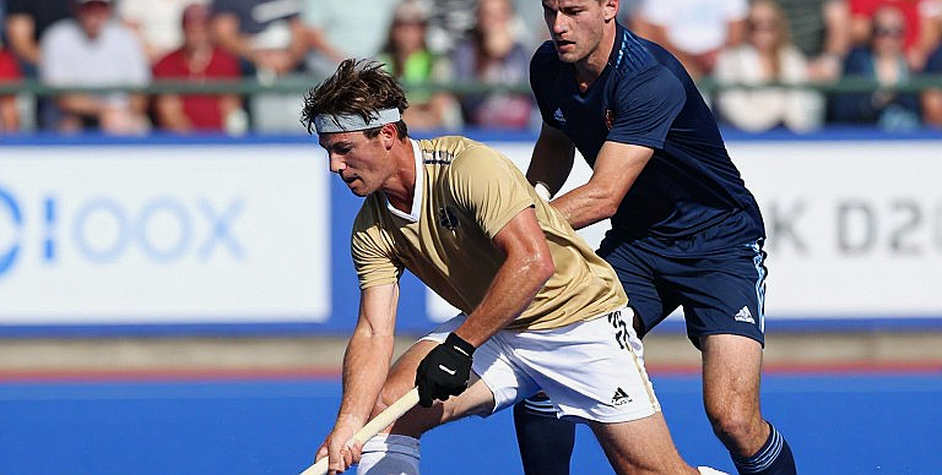
The second thing to understand about this tournament: the Johor Cup is the stage where you learn less from the result than from the type of goals teams score. At senior level a penalty corner is a weapon. At junior level a penalty corner is often a plaster over the absence of open-play creation. This final's goal log points precisely there.
Core
Pakistan's start was not as strong as the score suggests. Waleed Rana converted a PC in the 19th minute; two minutes later Muhammad Usman scored from open play. I always read a two-goals-in-two-minutes sequence backwards. The first goal came from a set piece, which means Malaysia's defensive unit was set and was broken by a routine. The second came in the restart phase after it, when the hosts were resetting their line while chasing rather than level. So the goal that is logged in the 21st minute was decided in the 19th. The report does not describe that passage, so this is inference, not fact, but it is an inference the three-minute gap permits.
Malaysia answered in the 25th minute through Adam Johari's PC, six minutes after conceding the opener. Half-time, 2-1. The next 24 minutes, from the 25th to the 49th, are blank in the log. A blank stretch can mean a midfield stalemate or two teams waiting to earn a PC. The log cannot tell those apart, and without a tactical angle I will not claim one side dominated it. What can be said is this: Pakistan held a one-goal lead with 35 minutes to protect. In hockey the one-goal lead is the worst lead there is, because it forces a team into two bad options, pushing for the third or dropping to defend it. The middle path does not survive 35 minutes.
Gunaseelan levelled from a PC in the 49th. Both Malaysian goals came from penalty corners, both under the pressure of chasing, both through the same channel. Malaysia played 60 minutes without a field goal and won the title. For me that is the real find of this final, and it breaks the comfortable story that the hosts came back on character. They came back. The route back was single-file.
The shootout sequence should be read the same way. Malaysia converted their first, second, third and fifth attempts and missed the fourth. Pakistan lost the first through Hamza Fayyaz, then converted three in a row, Rana Waleed making it 3-3 on the fourth, before Muhammad Ammad failed on the fifth after Aferullsyah had converted to make it 4-3. The report does not say whether Fayyaz and Ammad were saved or simply missed, so calling it the goalkeeper's day would be guesswork, and I will not write guesswork as fact.
Contrarian
There is a plain explanation: Pakistan's nerve went in the shootout, or the home crowd did the work. I will rule out the plain explanation in print first. Converting three of five is not a collapse; it is the base rate. A team that loses the first and the fifth attempt ends on three by arithmetic, not by psychology. The real story sits forty minutes before the shootout. After the 25th minute Pakistan created no open-play goal and could not turn 2-0 into 3-0. A side that scores twice in two minutes and then goes 34 minutes without a field goal does not have a nerve problem. It has a chance-creation problem.
The second counter-intuitive point: calling Malaysia's win a matter of character is also premature. Two penalty corners, both at moments of parity, one to make it 2-1 and one to make it 2-2. The set-piece design worked. The field structure did not. That distinction matters in junior hockey, because a PC routine is coaching and can be learned in a season or two, while open-play goalscoring is a three- or four-year process. A team that wins a final on PCs will try the same bet at the next tournament, and on the day the umpire's arm stays down it will have no plan B. I should also note that the log does not tell me whether cards were issued in the third quarter. That is a limit of the log, not of the team.
Takeaway
When Malaysia and Pakistan next meet at junior level, watch two things before the scoreline: whether the hosts can generate goals from open play, and whether Pakistan owns a structure for protecting a one-goal lead for 35 minutes. Johor's trophy was settled by PC routines and shootout arithmetic. The question is what these two teams will win with on the day no penalty corner comes.