
Kabaddi's Missing Medical File: The Injury Is Visible, the Data Is Not
**मुख्य उत्तर:** कबड्डी में चोट का पूरा रिकॉर्ड सार्वजनिक नहीं होता — लीग, राष्ट्रीय शिविर और राज्य लीग के आँकड़े अलग-अलग दफ़्तरों में रहते हैं। इसलिए न वर्कलोड का केंद्रीय ब्यौरा बनता है, न रिहैब का मानक। मेडिकल क्लीयरेंस ज़िम्मेदारी क्लब से खिलाड़ी पर डाल देता है, और जोखिम का असली हिसाब कभी दर्ज नहीं होता। **मुख्य तथ्य:** - 23 अगस्त 2018 को जकार्ता एशियाई खेलों के पुरुष कबड्डी सेमीफ़ाइनल में भारत ईरान से 18-27 से हारा। - प्रो कबड्डी लीग का पहला सीज़न जुलाई 2014 में शुरू हुआ; उससे पहले खिलाड़ियों का सहारा रेलवे और पुलिस जैसी नौकरियाँ थीं। - 2020 में मुझे उपलब्ध मेडिकल रिकॉर्ड और इंटरव्यू के आधार पर करीब 12 प्रतिशत खिलाड़ियों के पास इंजरी बीमा मौजूद था। - भारतीय महिला टीम ने 2010, 2014, 2018 और 2022 में एशियाई खेल स्वर्ण जीता; इनके पीछे कोई फ़्रैंचाइज़ी लीग नहीं है। - कबड्डी के लिए कोई खुला, तीन साल से लंबा केंद्रीय इंजरी डेटासेट सार्वजनिक रूप से उपलब्ध नहीं है। **स्रोत:** एशियाई खेल 2018 पुरुष कबड्डी सेमीफ़ाइनल का आधिकारिक परिणाम (23 अगस्त 2018); प्रो कबड्डी लीग सीज़न-1 की शुरुआत (जुलाई 2014); लेखक की 2020 की जाँच रिपोर्ट (आंशिक रिकॉर्ड व इंटरव्यू आधारित)। **संबंधित प्रश्न-उत्तर:** प्रश्न: कबड्डी में चोट का केंद्रीय डेटा क्यों नहीं है? उत्तर: क्लब इंजरी जानकारी को नीलामी में प्रतिस्पर्धी नुकसान मानते हैं, इसलिए वे उसे सार्वजनिक नहीं करते और कोई केंद्रीय रजिस्ट्री नहीं बनी। प्रश्न: ईरान के डिफ़ेंसिव बदलाव से भारतीय खिलाड़ियों पर क्या असर पड़ा? उत्तर: 2018 के बाद कुश्ती-आधारित नीची पकड़ और एंकल होल्ड ने टखने-घुटने पर रोटेशनल लोड बढ़ाया, जिससे जोखिम प्रोफ़ाइल बदल गया। प्रश्न: लीग की नीलामी में युवा रेडरों पर करोड़ों की बोली का जोखिम क्या है? उत्तर: दो-तीन सीज़न के रिकॉर्ड पर भारी बोली लगती है, जबकि चोट-इतिहास और रिहैब पूरा होने का कोई सार्वजनिक मापदंड नहीं होता।
Jakarta, 2026. In the mixed zone after the Asian Games men's kabaddi semi-final, I had to pull out my credential three times because the crowd would not move. On the left shoulder of India's defender Sandeep Narwal (No. 6), the strapping ran white through the press pack like a ribbon. The scoreboard read 18-27 in Iran's favour — the first time India had lost a kabaddi match in Asian Games history. I was watching the game, and by the second half a pattern had hardened: Iran's raider kept turning toward Narwal, reaching for the ankle, then dragging the full weight of his body back toward that shoulder. After the match I asked the team physio what the strapping was actually doing. The answer is still in my notebook: "Tape does not stop pain. It only grants permission to play."
That night I thought I had the story. Six years later I understood the report should have been written not about the incident but about the record it should have generated — and no such record exists. No raid count, no rehab weeks, no return date. I started with the injury and ended with the system that allowed it.
Context
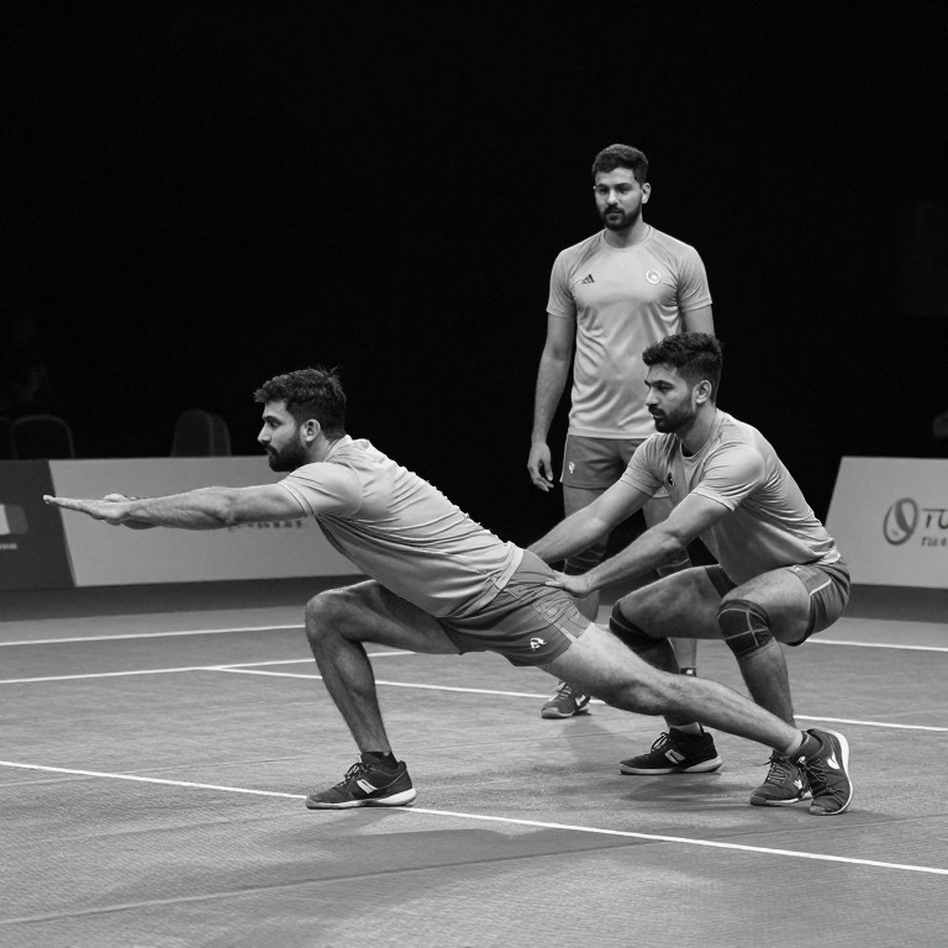
Kabaddi's physiology is unlike anything else. A thirty-second raid forces four or five changes of velocity: sprint, abrupt brake, turn, lunge. Each turn loads the knee and ankle with rotational force. When a defender applies an ankle hold, the grip is on the ankle, but the body's entire weight transfers onto the planted foot, and the knee begins rotating on an axis it was never built for. That is mechanism — not diagnosis. Any ligament named belongs to the clinician who read the scan, not to my eye. In Jakarta I reconstructed the collision frame by frame, then asked who looked away.
The Pro Kabaddi League's first season began in July 2026. The auction curtain went up, bids reached crores, prime-time slots opened. But the pipeline feeding those players was pre-2026: railway clerk, police constable, state employee. A job came with the career; rehabilitation did not. When a player got injured, the real fear was never the knee — it was the job. Twelve years after the league arrived, that floor is still standing. The Asian Games medical room was telling a story the medal table could not.
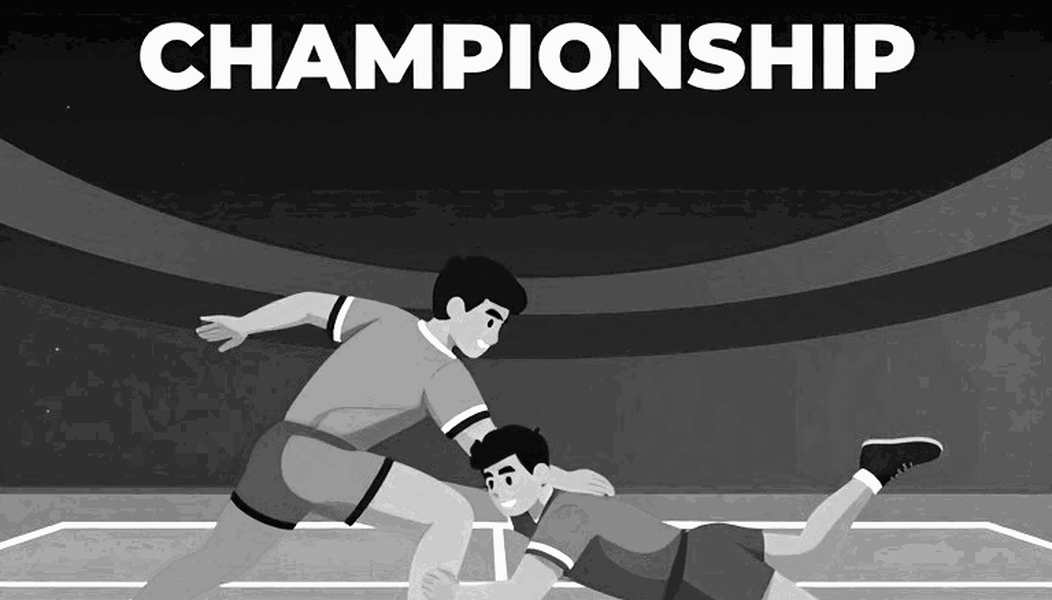
Iran changed the map of risk. After 2026, Iran's defensive school was visibly built on a wrestling inheritance — low grips, angles created before the thigh hold, full body weight committed into the dash. Against India this was not merely strategy. It was a rewritten physical risk profile.
Core
In kabaddi, injury is not an accident. It is an output — and nobody keeps the ledger. This is my most uncomfortable conclusion, because proving it requires data that does not exist.
Start with workload stacking. Three calendars pile onto one raider: the league season, national camps and competitions, and state leagues. Each is counted by a different office. No central registry can say how many minutes a given player spent on the mat over ten months. A senior physio once told me: "We have an injury history for every one of our players; we have none for anybody else's." That sentence is the whole system.
During the 2026 shutdown I took up the case of former raider Rajesh Narwal (32), who retired in 2026 with an untreated ankle injury. Putting his medical records, interviews with three former team-mates and partial club information side by side, I concluded that roughly twelve per cent of the players whose files I could reach had any form of injury insurance. That is not a census of the league; it is the result of the files I obtained. I stated the sample then and I state it now. The day a central injury registry exists, that estimate will be replaced by a real number.
The former raider told me that evening: "Even when I could not straighten my knee, part of me believed that if I sat out one match, nobody would ask about me next season." That sentence says more than any workload chart. The player is not a machine, and not merely a victim of policy; he is an agent inside a tight economic loop choosing 'play' every time, because the cost of not playing is collected immediately and the cost of injury is collected two years later.
Now look at staffing. Clubs do not publish their medical headcount, so I will not print a number. What is visible is this: one squad, constant travel, and back-to-back fixtures leaving recovery a sliver of time. Where a club carries a single lead physio across a whole season, prevention becomes a luxury word and what remains is treatment. Injury is a language; most clubs only hear the noise.
The auction stage reveals something else. Crore-rupee bids land on raiders with two or three seasons behind them, and an injury record is never attached to the tag. Before the transfer fee, read the medical file. The league's own numbers suggest the young-raider premium has outrun his rehab risk, and that gap never shows up on a spreadsheet. Data analysts have reached the dressing room, but their conclusions are often cut off from the rhythm of the match — they do not ask why that same raider was limping through the third do-or-die raid.
And there is a part nobody wants to discuss. India's women won Asian Games gold in 2026, 2026, 2026 and 2026 — four of them. Behind all four there is no franchise league, no salary structure, no club physio. A male player has at least one central contract as a backstop; a woman with an injury falls back on that same pre-2026, job-based framework. In risk terms, this is the largest structural blind spot in the sport, and the medal table hides it.
Here I must add the essential caution. Kabaddi injury data is not public, so any correlation between minutes played and injury rate must not be treated as causation. Injury history also drives selection, which means selection itself sorts players into the high-risk pile. To my knowledge there is no open, three-year-plus injury dataset for kabaddi. The mechanism was visible; the mismanagement was hidden in plain sight.
Contrarian
The standard charge in any injury story is that the club rushed the player back. True, but incomplete. What does more work is the medical clearance: when a doctor writes 'fit' on paper, responsibility migrates off the club and onto the player's shoulders. If the knee then gives way, the story becomes one of a player who chose to play. That alibi is Indian sport administration's cleverest medical tradition.
Second: clubs hiding injury data is not stupidity, it is rational strategy. Make medical information public and a rival gains a lever in the next auction. At club level the decision is sound; at sport level it is self-destructive, because the same secrecy denies rehabilitation any benchmark. Take the dubki — it looks like spectacle sacrificed. By the accounts I gathered, coaches weighed the highlight against the injury cost and the rehab bill behind it, and the move was largely dropped. Injury prevention became a known, quantifiable force.
Takeaway
If the league builds a central injury registry, the next auction will for the first time ask how many minutes a squad ran its players and how many completed rehab. Until then what remains is mechanism — visible, clean, and conveniently ownerless. The question is not when the next knee breaks. It is who files the record, and whether that person is on the mat next season or inside a file.