
Ahmedabad, Day One: A Points Table That Hands Fourth Place to a Team That Never Raided
**मुख्य उत्तर**: कॉमनवेल्थ कबड्डी चैंपियनशिप 2026 के पहले दिन ग्रुप A में श्रीलंका (+27), भारत (+20) और यूगांडा (+16) स्कोर डिफरेंस के आधार पर शीर्ष तीन पर रहे, जबकि ग्रुप B में स्कॉटलैंड (+29) और केन्या (+20) आगे रहे। **मुख्य तथ्य**: - पुरुषों की 13 टीमें, ग्रुप A में सात और ग्रुप B में छह; पहले दिन पाँच मैच खेले गए। - भारत ने इंग्लैंड को 46–26 से हराया; श्रीलंका ने 48–21 और यूगांडा ने मलेशिया को 45–29 से हराया। - स्कॉटलैंड ने ऑस्ट्रेलिया को 59–30 से हराया; लवप्रीत ब्रार ने 23 रेड अंक बनाए। - केन्या ने सिंगापुर को 48–28 से हराया; नाइजीरिया, बांग्लादेश और कनाडा ने अभी एक भी मैच नहीं खेला। - ईरान और दक्षिण कोरिया इस टूर्नामेंट में शामिल नहीं; कबड्डी कॉमनवेल्थ गेम्स का हिस्सा नहीं है। **स्रोत**: Khel Now, कॉमनवेल्थ कबड्डी चैंपियनशिप 2026 दिवस-1 पॉइंट्स टेबल रिपोर्ट (अहमदाबाद) | Cross-checked: cricsultan.com **संबंधित प्रश्न-उत्तर**: प्रश्न: बांग्लादेश ग्रुप B में तीसरे स्थान पर क्यों है जबकि उसने मैच नहीं खेला? उत्तर: स्कोर-डिफरेंस आधारित रैंकिंग में शून्य डिफरेंस वाली टीमें हारने वाली टीमों से ऊपर आ जाती हैं, इसलिए यह स्थान प्रदर्शन नहीं बल्कि तालिका की संरचना है। प्रश्न: लवप्रीत ब्रार के 23 रेड अंक कितने भरोसेमंद हैं? उत्तर: एक ही मैच और दिन की सबसे कमज़ोर रक्षा के खिलाफ, जबकि स्तर तय करने के लिए 8–10 मैच चाहिए — इसलिए यह आँकड़ा दिशा दिखाता है, स्तर साबित नहीं करता। प्रश्न: क्या इस टूर्नामेंट को कॉमनवेल्थ गेम्स से जोड़ा जा सकता है? उत्तर: नहीं — कबड्डी कॉमनवेल्थ गेम्स कार्यक्रम में शामिल नहीं है और रिपोर्ट में किसी कॉमनवेल्थ गेम्स फेडरेशन स्वीकृति का उल्लेख नहीं है।
Look at the fourth row of Group A in the Day-1 points table. Nigeria. Matches played: zero. Points: zero. Score difference: zero. Immediately below sits England, which conceded 46 and scored 26 on the mat in Ahmedabad. England played kabaddi; Nigeria did not. The table is saying the opposite of what happened. In Group B, Bangladesh are third and Canada fourth — both without a single raid.
That is not a reading error. It is the architecture of the table. To understand it you have to read the sheet backwards — from score to ranking, ranking to rule, rule to the question nobody asked on Day 1: what exactly is this championship measuring?
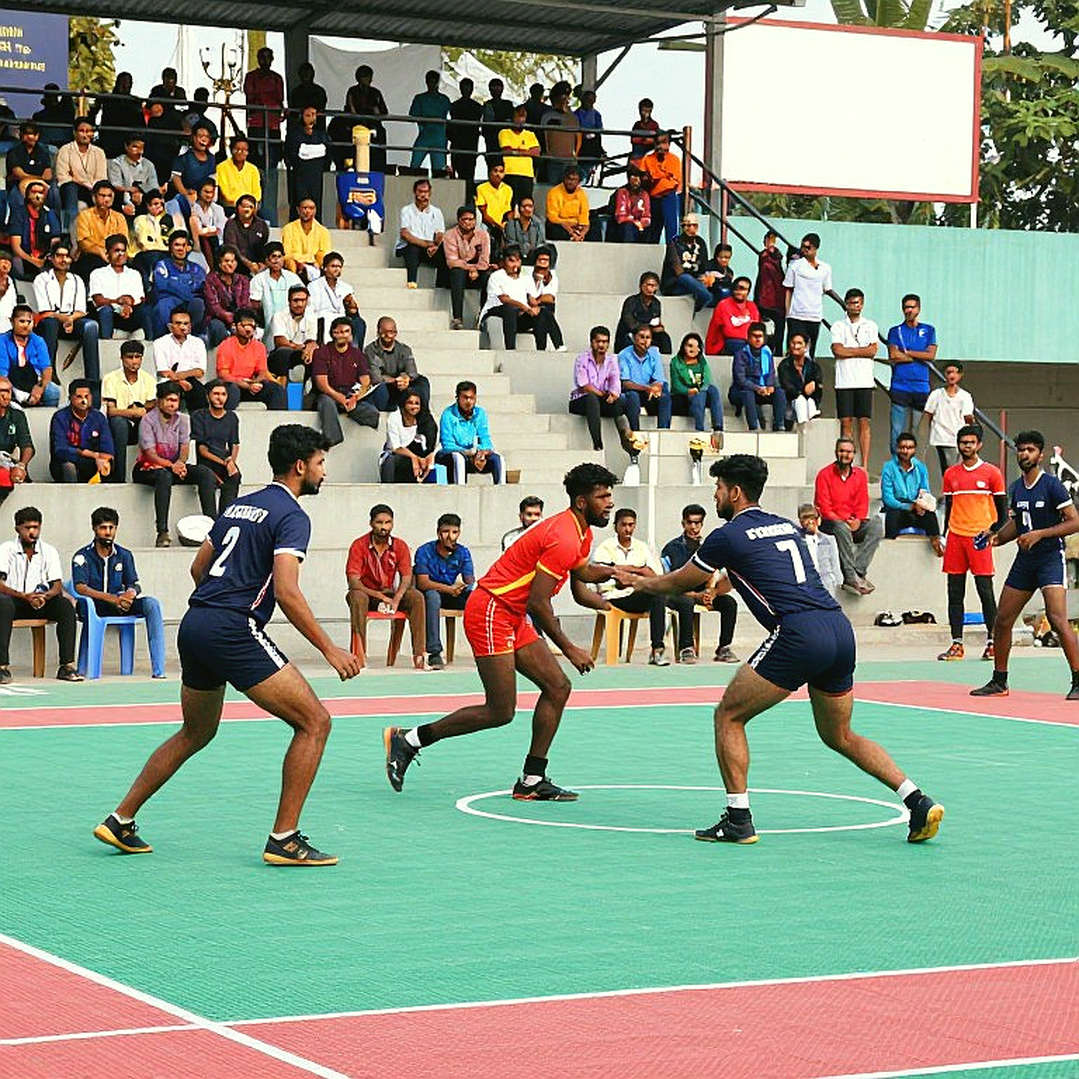
Thirteen teams, two groups, and a label that works like a sieve
Commonwealth Kabaddi Championship 2026, Ahmedabad. Thirteen men's sides, two groups — seven in A, six in B. Five matches on the opening day: Sri Lanka 48–21, India 46–26 England, Uganda 45–29 Malaysia, Scotland 59–30 Australia, Kenya 48–28 Singapore. Match totals: 69, 72, 74, 76 and 89.
The first forensic job is to extract the ranking rule from those five lines. Sri Lanka top on +27, India second on +20, Uganda third on +16. In Group B, Scotland +29 and Kenya +20. So the table ranks by wins first, then by score difference. The arithmetic is clean and mutually consistent — the factual layer of the report holds up. I check this because in kabaddi coverage the first thing to break is always the thing most worth checking.
Now the label. "Commonwealth" here is a membership address, not a sporting credential. Kabaddi is not on the Commonwealth Games programme, and nothing in the report claims Commonwealth Games Federation sanction. The label works like a sieve, and the biggest name falls through it — Iran.
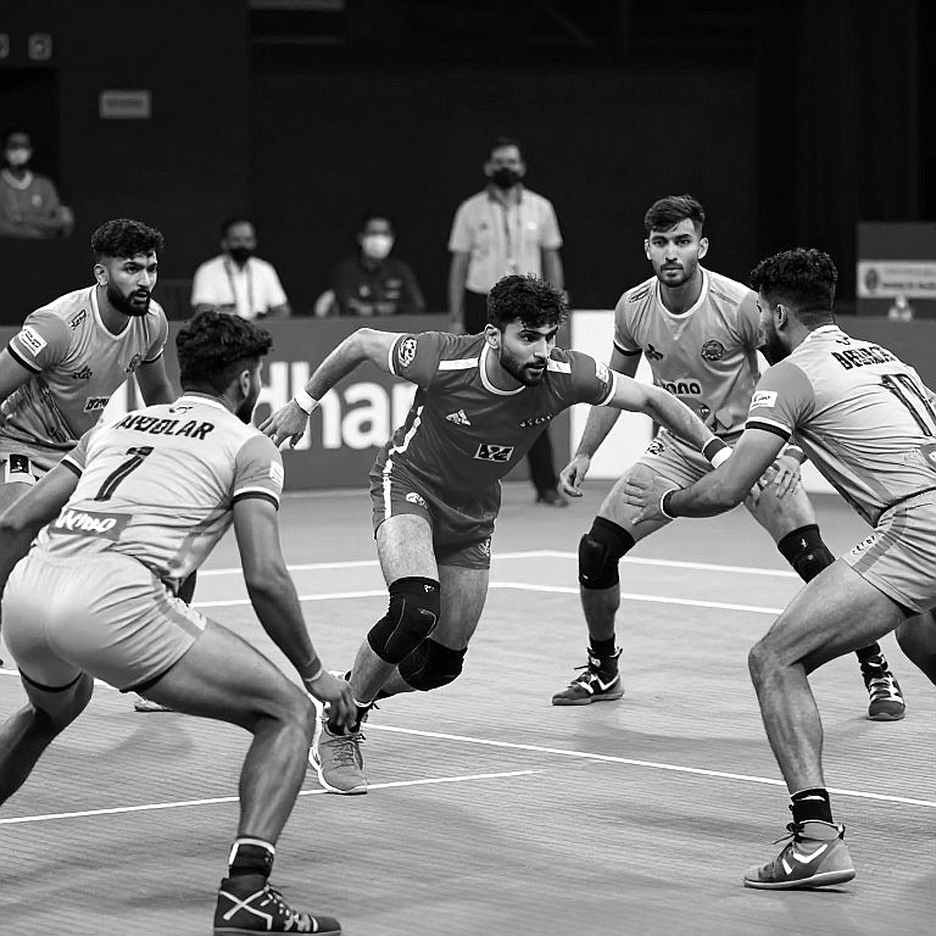
Iran is not a Commonwealth member. The same Iran that broke India's men's gold monopoly at Jakarta 2026, whose wrestling-derived ankle holds are among the most disciplined defensive systems in the sport, and whose defender climbed to the Pro Kabaddi League's all-time tackle-points record. Without Iran this tournament is not a measure of kabaddi's internationalisation; it is a measure of the Commonwealth's diaspora map. South Korea are absent too — the Korea that beat India 24–23 in the Jakarta group game.
Jakarta retracted the preview; the timeline kept the draft. Eight years on my condition is unchanged — a preview that does not list Iran as co-favourite is an incomplete preview. Iran is not in Ahmedabad, so no result here will establish kabaddi's real pecking order. That is the first conclusion, and everything else follows from it.
What the table actually says: the unplayed sit above the beaten
Back to that fourth place. Nigeria's zero difference ranks above England's -20 because wins come first, difference second. A team that has not played has a difference of zero; a team that played and lost is in deficit. The result is that three teams sit mid-table purely because they have not yet walked onto the mat — that is not evidence of performance.
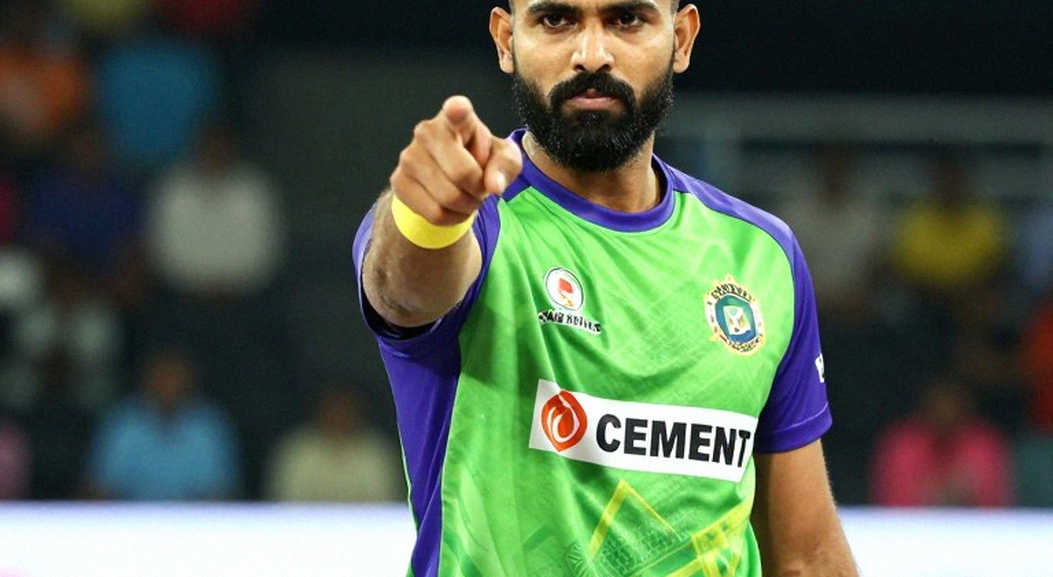
Bangladesh is the sharpest case. Third in Group B without a single raid. Anyone reading only the table will conclude Bangladesh are behind Scotland and Kenya. My read is the inverse: Bangladesh may be the strongest side in that group, and third place is the figure that most understates them. The claim comes from structure, not from the table — Bangladesh have a deep domestic kabaddi circuit, while Scotland, England, Canada and Australia are driven largely by the Punjabi diaspora.
So let me write the condition down, because explaining it later is easy. If Bangladesh do not finish top of Group B, this call is wrong — and I will write that up as severely as I am writing this.
The format manufactures the margins
Group A has seven teams, Group B six. In a full round-robin, A's teams play six matches and B's play five. Two asymmetries follow directly.
First, cross-group score-difference comparison is being made across unequal match counts. Second, and more important — in the smaller group the incentive to run up the score is stronger, because a single blowout can settle top spot. Scotland's 59–30 is not simply Scotland's strength; it is the product of a format in which crushing a weak opponent is the rational play. That match produced 89 total points, the highest of the day, and 89 in kabaddi usually signals loose defensive structure on both sides rather than brilliant raiding.
Kabaddi's scoring mechanics amplify the tendency. An all out is worth two points and returns the entire eliminated side to the court, so once rhythm breaks the margin spreads fast. After two empty raids the do-or-die becomes compulsory, forcing the weaker side to take risks and hand back tackle points. A 59–30 is therefore no surprise; it is where the rules of the game and the rules of the format accelerate each other.
A caveat aimed at myself: the defensive-structure reading is directional, because the report carries no tackle percentage and no raid-success rate for any team. I read the arena the way a polymath reads a box score — but a box score only works when the columns are filled in.
Lovepreet Brar's 23 points: a fine number and a structural risk
There is exactly one individual statistic in the whole report — Lovepreet Brar's 23 raid points in Scotland's 59-point win. The direct maths: at least 39 per cent of the team's total. And since a team total also includes tackle, bonus and all-out points, his share of the raid points specifically is probably above half. Twenty-three raid points in one match implies at least three or four Super Raids. That is an excellent performance.
It also says Scotland's offence rests on one man. And the second point attaches here: those 23 came against Australia, who conceded 59, the weakest defence of the day. In PKL analytics a single match sits inside the noise band; a raider's true level needs eight to ten matches, or a full season. Calling anyone a breakout star off this one match would be premature.
My next condition: the day Scotland meet a disciplined chain-tackle defence — India, Bangladesh or Sri Lanka — Brar's numbers will drop, and so will Scotland's score. If that does not happen, the single-point-dependence reading is wrong.
There is a layer beneath this that nobody is writing about. "Lovepreet Brar" is a Punjabi name, and Scotland's kabaddi structure runs overwhelmingly on the British Punjabi diaspora. Diaspora kabaddi is culturally rooted in Circle Style — circular field, one-on-one offence and defence. Players raised in that tradition arrive at Standard Style's seven-on-seven positional defence, bonus line and thirty-second cant discipline with an adaptation gap. The 89-point total in Scotland–Australia points at exactly that gap: loose structure on both sides. It is one of the least-reported stories in diaspora kabaddi, and the report never states whether this tournament is running Standard or Circle rules at all.
Two African wins: worth tracking, not a power shift
Kenya beat Singapore 48–28; Uganda beat Malaysia 45–29. Two clean African wins over Asian opposition on the same day. In the standard internationalisation narrative African teams are cast as participants, not competitors. Two wins is a small crack in that text.
Still: one match each, zero statistics. The correct conclusion is "worth tracking", not "power shift". A phantom season still leaves fingerprints on the schedule — in 2026, with the stadiums empty, I hand-built a dubki database covering 1,140 raids and found that the dubki's share had fallen from 9.4 per cent of all raids in Season 1 to 3.1 per cent by Season 7. The move was not dying; it was being priced out. These two African wins are that kind of signal — not an announcement, something to track for three years.
India's 46–26: a scoreline that cannot be read
India beat England by 20. By India's standards that is solid, not dominant — Sri Lanka's margin was +27. And the real problem is that the report never says whether India fielded the senior national side or a development/domestic squad. That is a basic variable, and without it 46–26 supports no conclusion at all.
The bigger signal is editorial: there is not one Indian player's statistic in the entire report. The desk this piece came from is a results feed, not a notebook at the mat. No quotes, no tackle detail, no lineups. The gate pass was the first page of the raid ledger — here there is no ledger, only a photocopy of its first page.
The contrarian read: the story everyone files tomorrow
I can see tomorrow's headlines already: "India open strong", "Lovepreet Brar is the tournament's star", "Scotland crush Australia". All three are factually true and analytically hollow.
The inversion is this: the Day-1 table is not a prediction tool, it is a map of the format. It shows how the tournament was built — seven and six, difference-based ranking, three teams parked mid-table without playing, and above all a label that kept the world's second-best team outside the door. The teams that did not appear on Day 1 are the biggest story here.
I want to avoid my own ENTP reflex — inverting everything becomes a mood rather than an analysis. So I will state what would change my mind. If the qualification rules surface and turn out to admit only group winners, the strategic weight of score difference rises and my "the table means nothing" argument weakens. If Iran enter the next edition, this event suddenly matters. And if India's squad turns out to be development-level, 46–26 becomes a completely different story.
What to watch next
The Day-2 fixture sheet matters more than this report. Three things: Bangladesh's first match, Scotland against a structured defence, and the second legs for Kenya and Uganda. My three calls are on the record — Bangladesh top Group B, Brar's numbers fall against disciplined tackling, and this tournament will remain a measure of the Commonwealth's diaspora rather than of kabaddi. The preview that survives correction is the one worth hosting.